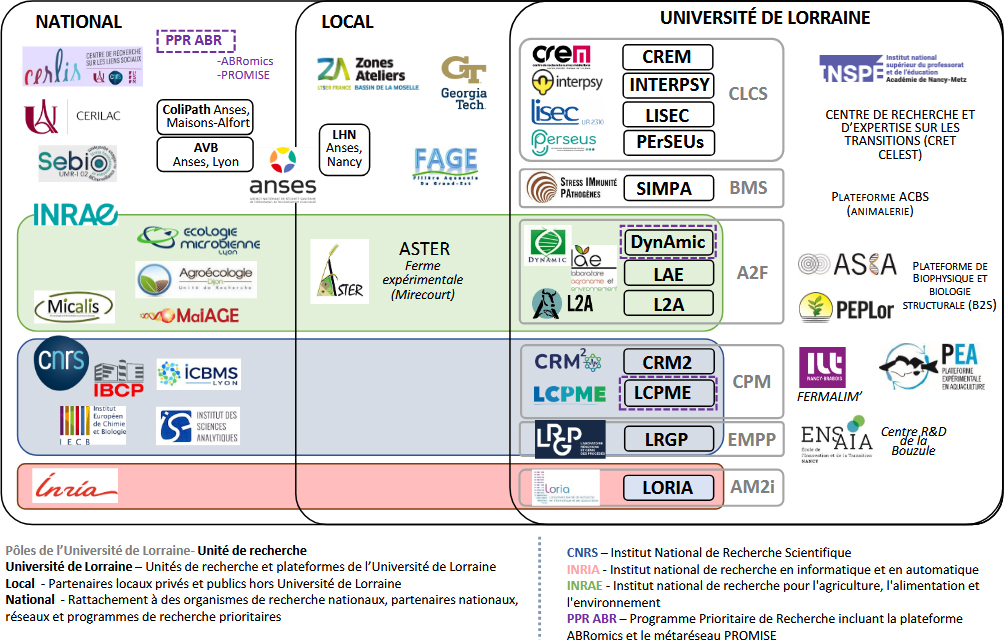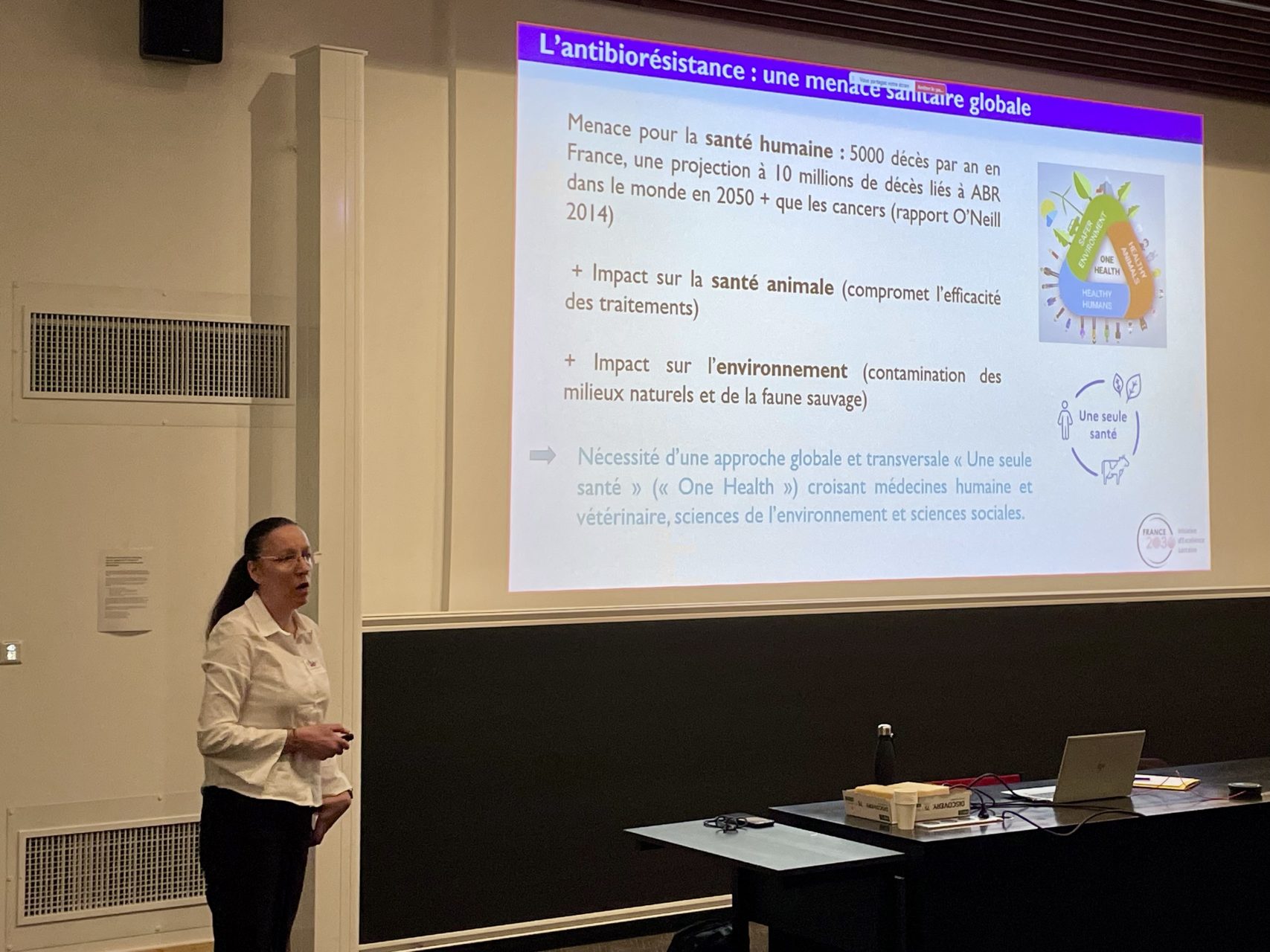



Le projet Impact Antibiorésistance (ABR), soutenu par l’I-SITE Initiative d’Excellence Lorraine et inscrit dans la dynamique d’UNYS vise à comprendre et limiter la dissémination de la résistance bactérienne aux antibiotiques. Il s’appuie sur une approche globale « Une seule santé » (« One Health ») et multi-échelle, du niveau moléculaire à l’écosystème, afin de proposer des stratégies de lutte contre l’antibiorésistance. Plusieurs volets seront explorés : mécanismes de dissémination, facteurs d’aggravation et effets barrière potentiels. Un autre axe majeur du projet consiste à renforcer l’engagement de la société dans la lutte contre l’antibiorésistance. Ce projet interdisciplinaire va mobiliser 13 équipes de recherche lorraines, 7 plateformes techniques et un réseau de partenaires locaux et nationaux.
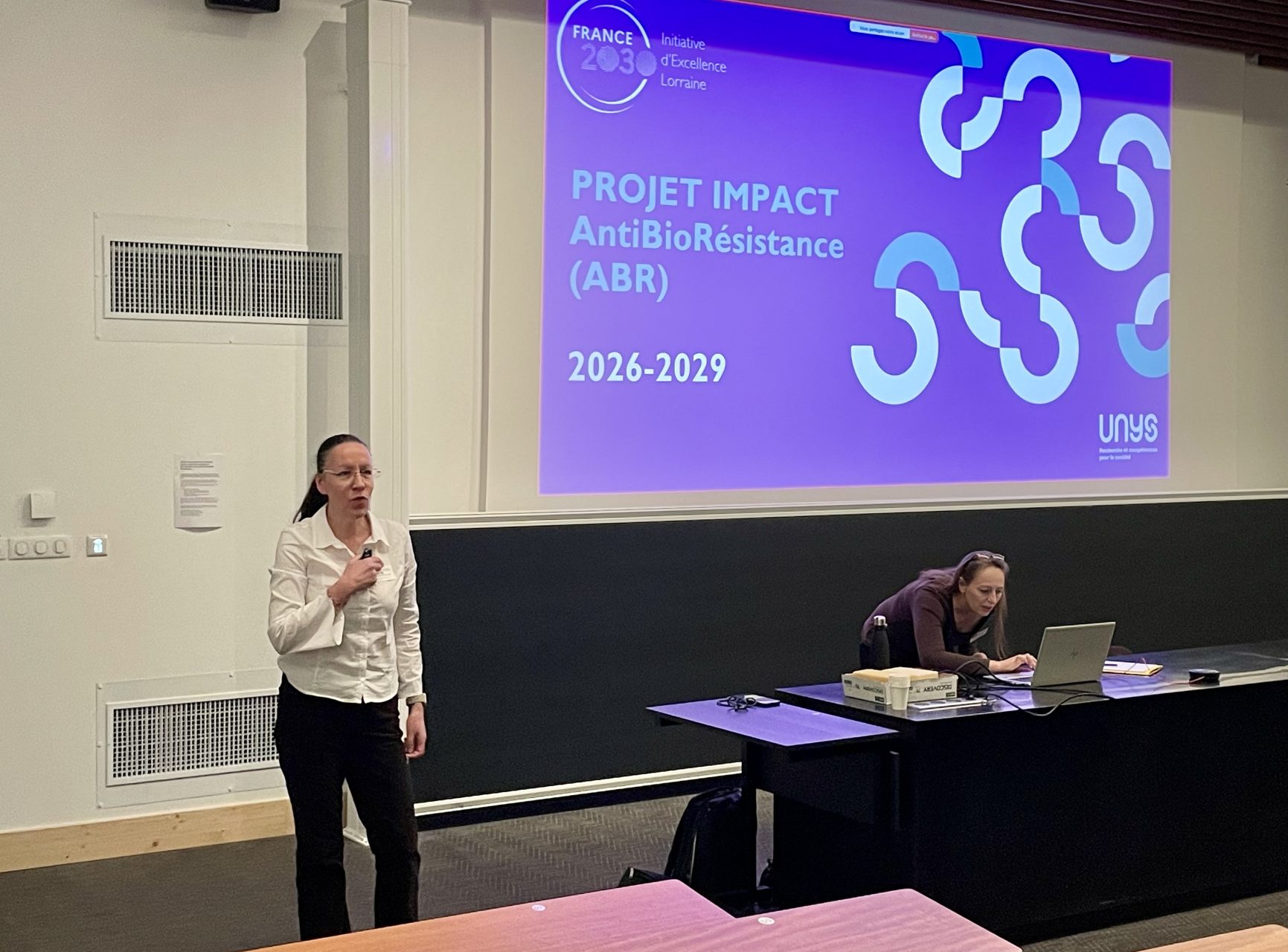
Le 30 janvier 2026, la Faculté des Sciences et Technologies (FST) de l’Université de Lorraine a accueilli le séminaire de lancement du projet IMPACT ABR, réunissant une cinquantaine de chercheurs, enseignants-chercheurs et partenaires académiques et institutionnels autour de cet enjeu majeur de santé publique.
La matinée s’est ouverte par une introduction de Benoît Grasser, Directeur exécutif de l’I-SITE, qui en a recontextualisé les ambitions ainsi que du projet IMPACT, suivie de Sophie Payot-Lacroix, coordinatrice du projet, qui en a présenté les objectifs scientifiques.
Les trois workpackages (WP) ont ensuite été présentés par leurs responsables :
- WP1, présenté par Aurélie Pourrez, avec un séminaire de Cyril Masselot (CIMEOS, Besançon) consacré à l’intelligence territoriale et à la sensibilisation à l’antibiorésistance.
- WP2, présenté par Virginie Libante, complété par l’intervention de Sarah Bigot (MMSB, Lyon) sur la dissémination de l’antibiorésistance par conjugaison bactérienne.
- WP3, présenté par Christophe Merlin, suivi du séminaire de Delphine Destoumieux Garzon (IHPE, Montpellier) portant sur la circulation et la propagation de la résistance aux antibiotiques dans l’environnement marin côtier.
L’après-midi s’est poursuivi par un comité de pilotage élargi, marquant le démarrage opérationnel du projet. Ce séminaire a posé les bases scientifiques et collaboratives du projet ABR, dont l’ambition est de mieux comprendre la diffusion de l’antibiorésistance et de développer des stratégies de médiations innovantes pour en limiter l’impact.
ENGLISH
Launch of the IMPACT AntiBioResistance Project
The IMPACT AntiBioResistance (ABR) project, supported by the I-SITE Initiative d’Excellence Lorraine and part of the UNYS dynamic, aims to better understand and limit the spread of bacterial antibiotic resistance. It is based on a comprehensive “One Health” and multi-scale approach, ranging from the molecular level to the ecosystem, in order to develop strategies to combat antibiotic resistance. Several areas will be explored: dissemination mechanisms, aggravating factors, and potential barrier effects. Another major objective of the project is to strengthen societal engagement in the fight against antibiotic resistance. This interdisciplinary programme brings together 13 research teams from Lorraine, 7 technical platforms, and a network of local and national partners.
On January 30, 2026, the Faculty of Science and Technology (FST) of the Université de Lorraine hosted the kick-off seminar of the IMPACT ABR project, bringing together fifty researchers, faculty members, and academic and institutional partners around this major public health challenge.
The morning began with an introduction by Benoît Grasser, Executive Director of I-SITE, who provided context regarding the ambitions of both the I-SITE, UNYS and IMPACT project, followed by Sophie Payot-Lacroix, principal investigator, who presented its scientific objectives.
The three work packages (WPs) were then introduced by their respective leaders:
- WP1, presented by Aurélie Pourrez, featured a seminar by Cyril Masselot (CIMEOS, Besançon) on territorial intelligence and awareness-raising in the field of antibiotic resistance.
- WP2, presented by Virginie Libante, featured a presentation by Sarah Bigot (MMSB, Lyon) on the dissemination of antibiotic resistance through bacterial conjugation.
- WP3, presented by Christophe Merlin, followed by a seminar by Delphine Destoumieux Garzon (IHPE, Montpellier) on the circulation and spread of antibiotic resistance in coastal marine environments.
The afternoon continued with an extended steering committee meeting, marking the operational launch of the project. The seminar laid the scientific and collaborative foundations of the ABR project, whose ambition is to advance understanding of the spread of antibiotic resistance and to develop innovative mediation strategies to mitigate its impact.